
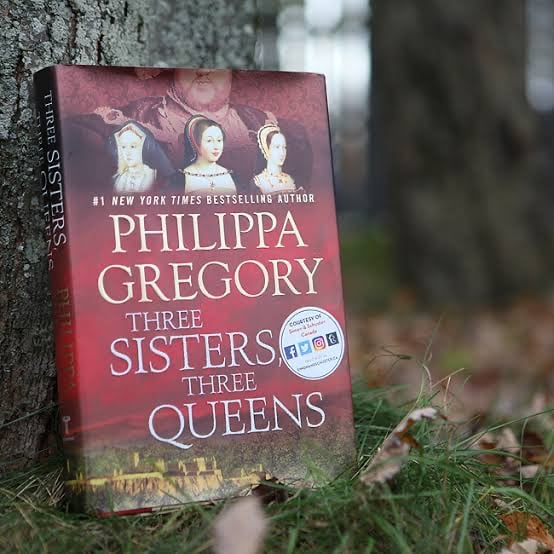
THREE SISTERS, THREE QUEENS
A novel by Philippa Gregory. Photo credits Amazon & Lost in the Rain.
HISTORICAL FICTION
4/18/20262 min read
There is a particular cruelty in being born a princess: you spend your entire life competing with the one person who should understand you best.
Three Sisters, Three Queens is not a story about kings or battles or the men who shaped history. It is a story about letters. Letters never sent. Letters never answered. Letters that arrive too late, bearing news of deaths that might have been mourned together if pride had not gotten in the way first.
Philippa Gregory takes three women—Margaret Tudor, Queen of Scots; Mary Tudor, Queen of France; and Katherine of Aragon, Queen of England—and locks them in a competition none of them chose. They are sisters by marriage, cousins by blood, rivals by circumstance. And the tragedy at the heart of this novel is that they might have loved each other, if only the world had let them.
Margaret speaks first. She is the oldest, the first married, the first sent away from home. She loves her brother Henry VIII with a desperation that curdles into resentment when he forgets her. She loves her husband James IV of Scotland with a passion that becomes grief when he dies on a battlefield against her own countrymen. She loves her son, her crown, her survival—and she learns, slowly, that loving and being loved are not the same thing.
Mary speaks next. She is the beauty, the favorite, the one who marries an aging king of France and dances at his funeral. She dares to love for herself—choosing Charles Brandon against her brother's command—and pays for that choice with exile. Her letters to Margaret go unanswered. Her letters to Katherine go cold. She watches her sisters-from-afar struggle and suffer and fade, and she cannot reach them. The distance is too great. The pride too high.
And Katherine. Always Katherine. The constant princess, the abandoned wife, the woman who writes letter after letter to her sister-in-law Mary, begging for intervention, for comfort, for anything. Mary does not answer. Margaret does not answer. Katherine faces her destruction alone, and the silence of the women who should have stood with her becomes its own kind of betrayal.
The lessons here are unbearable. It is a story about how women internalize the competition men create for them. About how thrones separate what blood should unite. About how Margaret, Mary, and Katherine each die alone—not because they lacked sisters, but because they forgot, somewhere in the business of being queens, that sisters matter more than crowns.
By the final page, when the last sister stands in the wreckage of her family, you understand. They were three sisters, three queens, three women who could have ruled the world together. Instead, they ruled alone. And alone, they fell.