
THE TAMING OF THE QUEEN
A novel by Philippa Gregory. Photo credits Henpicked & Philippa Gregory website.
HISTORICAL FICTION
4/18/20262 min read
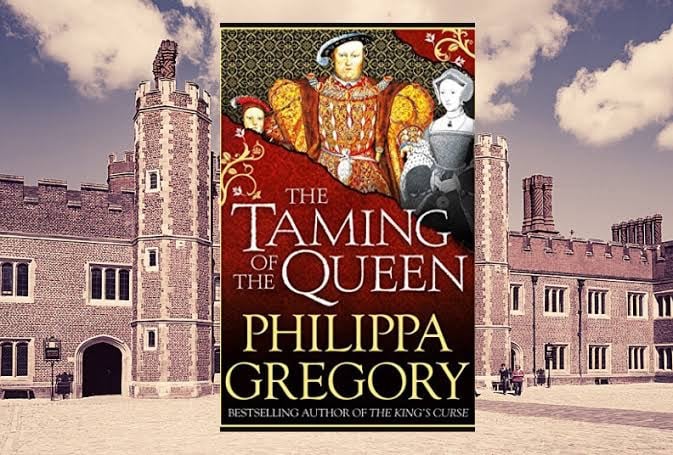
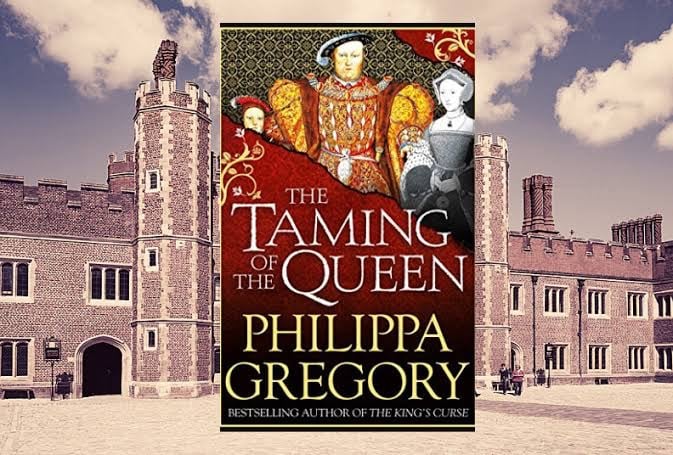
Kateryn Parr walked into the lion's den with her eyes open. She knew Henry VIII had buried wives like failed experiments. She knew her predecessors had lost their heads, their daughters, their very names to his bottomless hunger. And still she walked. Not for love. Not for ambition. But because when a king commands, women learn that refusal is just another word for death.
The Taming of the Queen is Philippa Gregory's most claustrophobic novel. The walls close in from the first page. We meet Kateryn as she becomes Henry's sixth wife, a woman of learning and faith who believes she can manage this monstrous man with kindness and intelligence. She is wrong. And her education in exactly how wrong she is forms the most gripping reading experience I have had in years.
Gregory does something extraordinary here. She makes us love Kateryn for her mind—her passion for reform, her hunger for scripture, her secret hope that women might someday read and think and speak without permission. And then she makes us watch as Henry, aging and rotting and growing more dangerous by the day, realizes his wife has ideas of her own.
The novel's title is its thesis. Henry does not want a partner. He wants submission. He wants to tame the one creature who still looks at him without fear, who still speaks to him as if he were a man instead of a monument. And when Kateryn cannot stop being herself—cannot stop writing, cannot stop debating, cannot stop believing—the trap springs shut.
The most terrifying passages are not the accusations of heresy or the soldiers at the door. They are the quiet moments. Henry's hand on her neck. Henry's smile when he knows she is afraid. Henry reading her private writings, nodding, waiting. Kateryn learns what all Henry's wives learned: that his love was always a leash, and the moment she tugged against it, it became a noose.
She survives. Barely. By crawling. By begging. By watching her friends burn while she bends her knee and thanks the man who almost killed her for his mercy. And that survival is the novel's cruelest lesson. Kateryn lives not because she is brave, but because she learns, in the final moment, to be small enough to escape through a door that will never open again.
By the end, you understand. The taming of the queen was never about making her obedient. It was about making her understand that her mind, her faith, her very self were only ever lent to her, and could be taken back whenever a king grew tired of looking at them. Kateryn Parr survived Henry Tudor. But something in her died anyway. And that something was the belief that a woman could be both loved and free.