
THE LADY OF THE RIVERS
A novel by Philippa Gregory. Photo credits Izzy Reads & Books Read by Hannel.
HISTORICAL FICTION
4/6/20262 min read
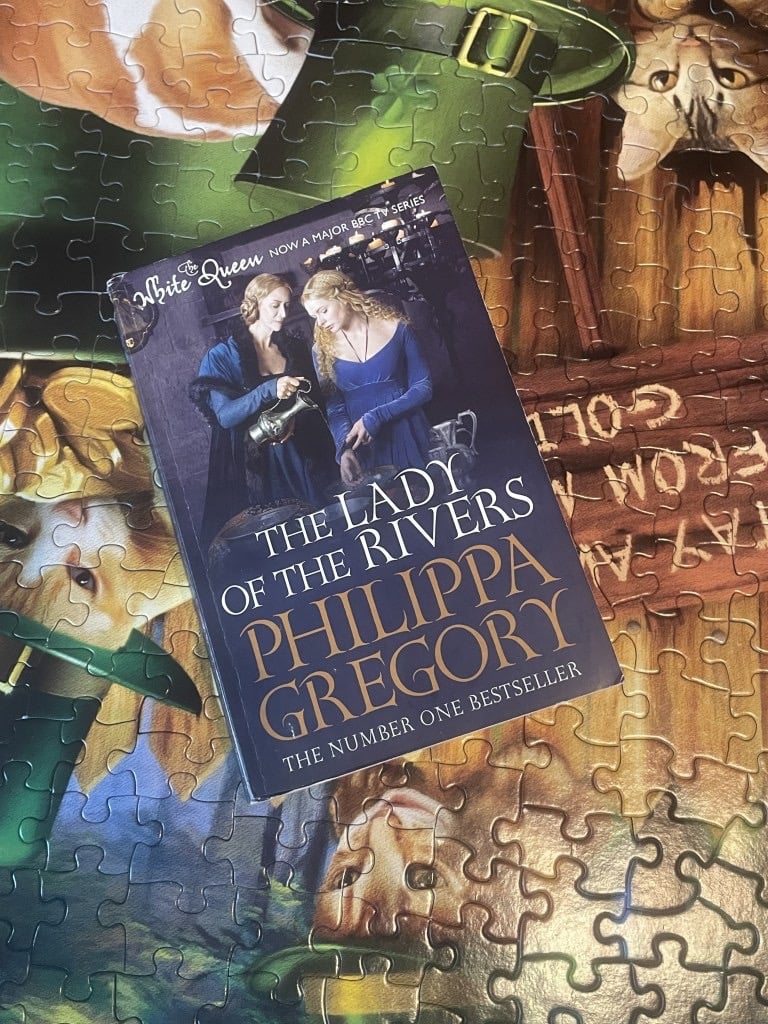
There is a moment in every Philippa Gregory novel when the centuries fall away. You are no longer reading about history. You are standing in it, your heart hammering against your ribs, watching a woman make a choice that will echo through generations.
The Lady of the Rivers is full of such moments. But one haunts me above all others.
Jacquetta stands at the edge of a river. She is young, still half a child, but already she carries the weight of her grandmother's teachings—the old knowledge, the Sight, the understanding that water remembers what land forgets. Behind her lies the castle, the duties, the marriage to a man she did not choose. Before her lies the current, dark and endless, and in it she sees something she cannot name.
Gregory writes these scenes with a painter's delicacy. The medieval world rises around you in all its brutality and beauty—the mud of battlefields, the chill of stone corridors, the impossible luxury of silk against skin. But it is the invisible world that truly lives here. The sense that some women see more than they should, that some knowledge cannot be burned away by Inquisition or buried by time.
Jacquetta serves two queens. She watches Joan of Arc walk toward her fire. She holds the hand of Margaret of Anjou as madness claims her. She bears fourteen children and buries too many of them. And through it all, she keeps her secrets close—the ones that would see her called witch, the ones that pass to her daughter Elizabeth, who will pass them to her granddaughter, the line of women who shape England from shadows.
What moves me most is not the magic. It is the marriage. Jacquetta and Richard Woodville love each other with a fierceness that feels almost impossible for their time. They choose each other, again and again, through war and exile and the endless cruelty of men who think women are pawns. When he dies finally, bloodily, on a battlefield, you feel the world tilt. The love that anchored her is gone. But she stands anyway. She endures.
By the end, you understand. The river does not stop flowing because one woman stops watching. And Jacquetta's daughters, her daughters' daughters, will stand on its banks long after she is dust. The Lady of the Rivers is not just a novel. It is inheritance.