
THE KING'S CURSE
A novel by Philippa Gregory. Photo credits Amazon.
HISTORICAL FICTION
4/11/20262 min read
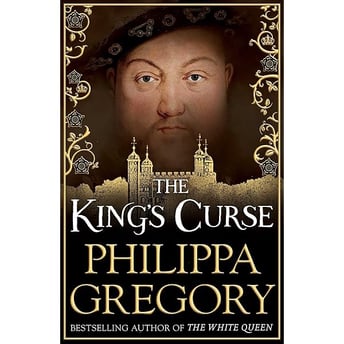
There is a particular terror in outliving everyone you love. Margaret Pole understood this terror intimately. She outlived her cousins, her friends, her enemies. She outlived two Plantagenet kings and three Tudors. She outlived her own safety without ever realizing it was gone.
Philippa Gregory's The King's Curse is the quietest of her novels and the most devastating. It does not thunder toward battlefields or gallop toward beheadings. It walks. Slowly. Patiently. With the measured step of a woman who has learned that survival means never drawing attention to yourself.
Margaret Plantagenet carries her danger in her name. She is the niece of Edward IV and Richard III, cousin to the princes in the Tower, daughter of a man who drowned in a barrel of wine for betraying his king. Every drop of her blood screams York. And yet she wants nothing from this inheritance except to be forgotten.
Gregory gives us a woman who spends seven decades trying to disappear. Margaret marries a loyal Tudor servant. She bears children. She tends her gardens. She serves Catherine of Aragon with unwavering devotion. She raises her son Reginald for the church, hoping his holy orders will protect him from the ambitions that destroyed her family. She watches the world burn around her—the Reformation, the break from Rome, the fall of queens—and keeps her head down, keeps her faith, keeps believing that goodness is its own protection.
She is wrong.
The novel's genius is in its patience. We watch Margaret receive small slights, smaller warnings. A fine here. A confiscation there. A son who flees England and writes treasonous letters from abroad. Margaret writes to the king, defends herself, explains. She does not understand that explanation is irrelevant. The king does not fear what she does. He fears what she is.
When the end comes, it comes sideways. Not for anything she did, but for the blood in her veins and the son her womb produced. She is arrested, imprisoned in the Tower, kept for two years without trial. And then, at seventy, she is led to a scaffold where an inexperienced executioner takes eleven strokes to remove her head.
I closed this book and sat in silence for a very long time. Not because of the brutality—Gregory handles it with restraint. But because of the ordinariness of it. The quiet. The way a life of perfect loyalty ends in perfectly senseless violence.
The lesson is unbearable. Margaret Pole teaches us that innocence is not a shield. That service is not protection. That some curses are simply names written in a book, and no amount of goodness can erase them. She died not for treason, but for existence. And in that death, she became the most tragic figure of all: the one who never saw it coming.