
THE KINGMAKER'S DAUGHTER
A novel by Philippa Gregory. Photo credits Amazon & Write Your Stories- Weebly.
HISTORICAL FICTION
4/6/20262 min read
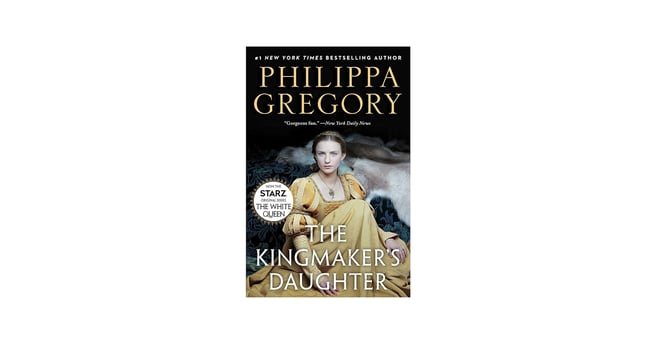
There is a particular kind of loneliness that comes from being the daughter of a man who loves power more than he loves you. Anne Neville understood this loneliness the way river stones understand water—by being worn down by it, year after year, until only the smoothest, hardest surface remains.
Philippa Gregory's The Kingmaker's Daughter is not a book about the Wars of the Roses. It is a book about what wars do to the women who survive them. And Anne Neville, the youngest daughter of the most powerful noble in England, survives everything except the silence history wraps around her like a shroud.
I came to this novel expecting battles and betrayals. I did not expect to fall into the quiet spaces between them. Gregory writes Anne with such tenderness, such careful attention to the small griefs that accumulate into a life, that I found myself reading passages twice just to feel them again. When Anne watches her father place a crown on the head of one king, then another, then snatch both away, you feel her confusion. When she is married as a child to a boy she barely knows, then widowed before she understands what marriage means, you feel her disappearance.
The novel's great achievement is how it makes you love Anne without ever pretending she is a hero. She schemes beside her sister Isabel, she competes for scraps of their father's attention, she marries Richard of Gloucester not for love but because he is the only hand reaching toward her in the darkness. Their relationship grows slowly, painfully, like grass through stone. And when Richard reaches for the throne—when the little princes vanish and history blackens his name forever—Anne does not save him. She cannot even save herself.
The most haunting passages come near the end. Anne knows she is dying. She knows her only child is dying. She knows the crown she wore so briefly will pass to a Tudor boy who never heard her name. And still she stands. Still she watches. Still she endures, because endurance is the only thing her father ever truly taught her.
By the final page, I understood something I had not expected. The kingmaker's daughter was never meant to make history. She was meant to be its quiet casualty, the girl who loved and lost and faded while men wrote their names in blood. Gregory refuses to let her fade. She holds Anne up to the light, and in that light, we see ourselves—all the small survivals, all the quiet griefs, all the love we give to people who cannot love us back.
Read this book. Then sit quietly for a while. Anne Neville deserves that much.