
THE BEST LAID PLANS
A novel by SIDNEY SHELDON. Photo credits Amazon & Effi Rosli.
MYSTERY
2/16/20263 min read
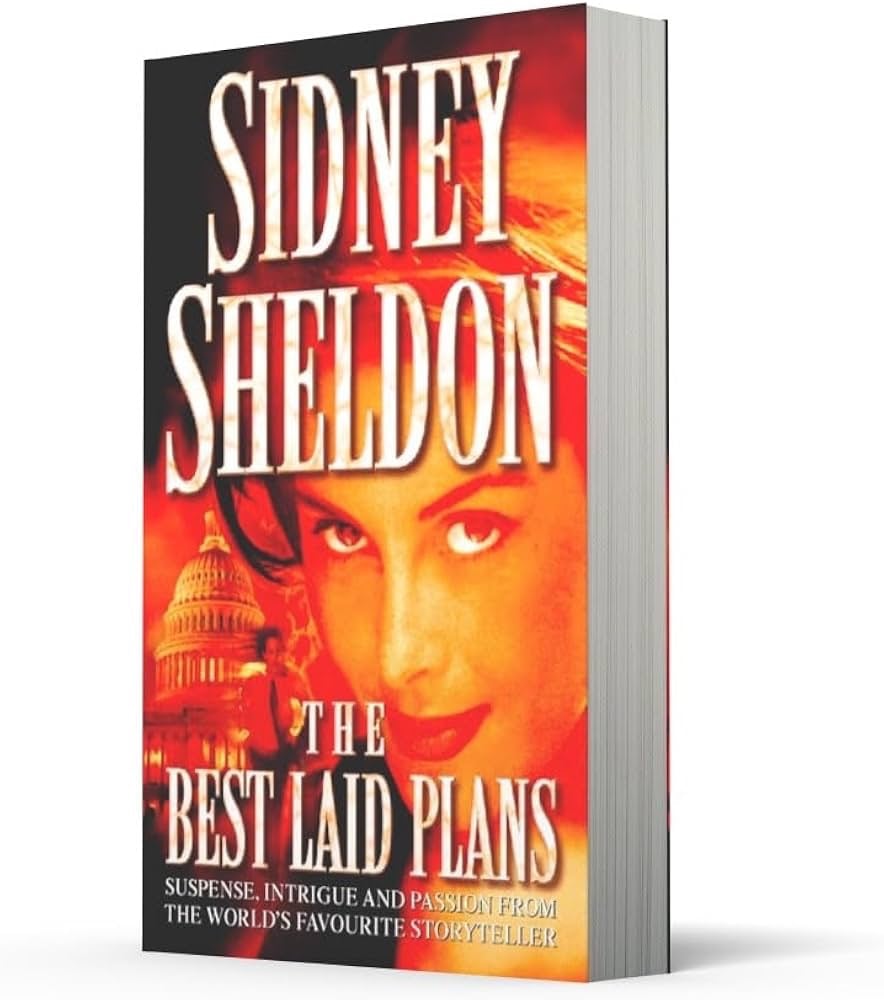
In the vast and often morally simplistic landscape of popular fiction, Sidney Sheldon’s The Best Laid Plans stands as a surprisingly nuanced artifact. Published in 1997, it tells the story of Leslie Stewart, a public relations executive who, after being publicly humiliated by her fiancé—the ambitious politician Oliver Russell—dedicates her life to orchestrating his ruin. On its surface, the novel is a classic tale of spurned love and political intrigue. Yet, beneath its fast-paced prose lies a sophisticated dissection of human nature, one that offers enduring lessons about the corrupting nature of power, the seductive emptiness of revenge, and the ultimate fragility of human intention.
The first and most obvious lesson of the novel concerns the relationship between power and identity. Oliver Russell begins his journey as a man with genuine political potential, but his ambition proves to be a solvent that dissolves his integrity. Sheldon demonstrates that power is not simply something one acquires; it is something that fundamentally alters who one is. Oliver’s willingness to trade love for political advancement does not merely cost him a relationship—it places him within a web of shadowy control from which he cannot escape. The lesson here is timeless: when individuals prioritize the pursuit of power over the preservation of their principles, they do not simply lose their way; they lose themselves entirely. They become prisoners of the very machinery they sought to master.
Equally compelling is the novel’s meditation on the nature of revenge. Leslie Stewart’s campaign against Oliver is executed with surgical precision. She builds a media empire with the sole purpose of destroying him, and by any objective measure, she succeeds. Yet, Sheldon refuses to allow his readers the comfort of a simple vindication. As Leslie ascends in her crusade, she undergoes a transformation that mirrors Oliver’s own. She becomes calculating, ruthless, and emotionally desiccated. Her victory, when it comes, feels less like triumph and more like tragedy. The lesson is profound: revenge, no matter how justified, consumes the one who wields it. The pursuit of another’s destruction often leaves the pursuer standing in the same ashes.
Perhaps the most resonant lesson for contemporary readers, however, lies in Sheldon’s treatment of narrative control. Leslie’s weapon of choice is not violence but perception. She understands that in the modern world, reality is shaped by the stories we tell. "Everybody's got a little skeleton buried somewhere," she reflects. "All you have to do is dig it up." In an age dominated by social media, viral condemnation, and the relentless scrutiny of public figures, this insight feels almost prophetic. Sheldon warns us that the power to shape a narrative is the power to destroy a life, and that this power is often wielded with little regard for truth or consequence.
Finally, the novel’s title carries an ironic weight that permeates its conclusion. Despite the meticulous planning of its characters—Leslie’s calculated revenge, Oliver’s strategic ascent, the conspiratorial machinations of a powerful senator—all their plans unravel. Sheldon suggests that human beings are not the masters of fate we imagine ourselves to be. Circumstance, chance, and the unintended consequences of our own actions conspire to upend even the most carefully laid schemes. The lesson is humbling: we are not the authors of our destiny; we are merely participants in a story larger than ourselves.
In the end, The Best Laid Plans offers more than the thrills of a political potboiler. It offers a mirror. It asks us to consider what we are willing to sacrifice for success, what becomes of us when we seek to harm those who have harmed us, and whether any plan can truly account for the beautiful, chaotic unpredictability of life. These are not questions that age; they are questions that haunt us across generations.