
OUTLIERS
by MALCOLM GLADWELL. Photo credits Amazing Workplaces & Undisputed Principles.
SELF-HELP
10/2/20252 min read

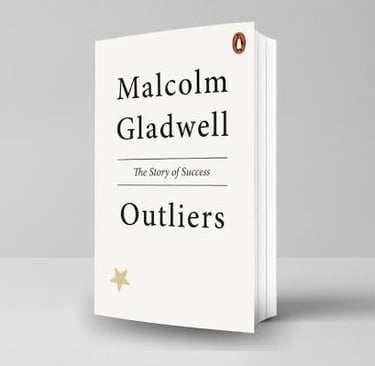
Malcolm Gladwell’s Outliers: The Story of Success is a fascinating book that fundamentally reshapes how we think about achievement. If you’ve ever looked at a billionaire tech genius, a superstar athlete, or a brilliant composer and thought their success was purely a result of innate talent and sheer will, this book will challenge that notion. Gladwell argues that outliers—people who operate outside the realm of ordinary achievement—are not just self-made prodigies. Instead, they are the beneficiaries of hidden advantages, extraordinary opportunities, and cultural legacies that explain their success in a much richer way.
The book’s most famous and relatable concept is the “10,000-Hour Rule.” Gladwell uses examples like The Beatles, who honed their craft in marathon performances in Hamburg, Germany, and Bill Gates, who had unique access to a computer terminal as a teenager. The rule suggests that true mastery in any field requires a colossal amount of practice—roughly 10,000 hours. This is both empowering and humbling. It means genius isn’t simply born; it’s painstakingly built. However, Gladwell brilliantly points out that even the opportunity to get those 10,000 hours is often a matter of luck—like being born in the right year or having a supportive family.
This is where Outliers becomes profoundly relevant. It dismantles the “myth of the self-made man” and forces us to consider the ecosystem of success. Why are so many elite Canadian hockey players born in the first few months of the year? Because of arbitrary age-cutoff dates that give them a developmental advantage. Why did a disproportionate number of the wealthiest people in history come from a single generation? Because they were born at the perfect time to capitalize on technological revolutions.
The key takeaway is that we often focus on the personality and intelligence of successful individuals while ignoring the crucial context: their culture, their family, their generation, and the unique opportunities they were handed. Outliers is a call to action to stop asking what successful people are like and start asking where they are from. It suggests that by creating a society where more people have access to the right opportunities—the right “10,000-hour” chances—we can generate many more outliers. It’s a compelling, thought-provoking read that will change the way you see the world of achievement.