
FIRST FAMILY
A novel by DAVID BALDACCI. Photo credits TracyReaderDad & Amazon.
CONTEMPORARY LITERATURE
10/13/20252 min read
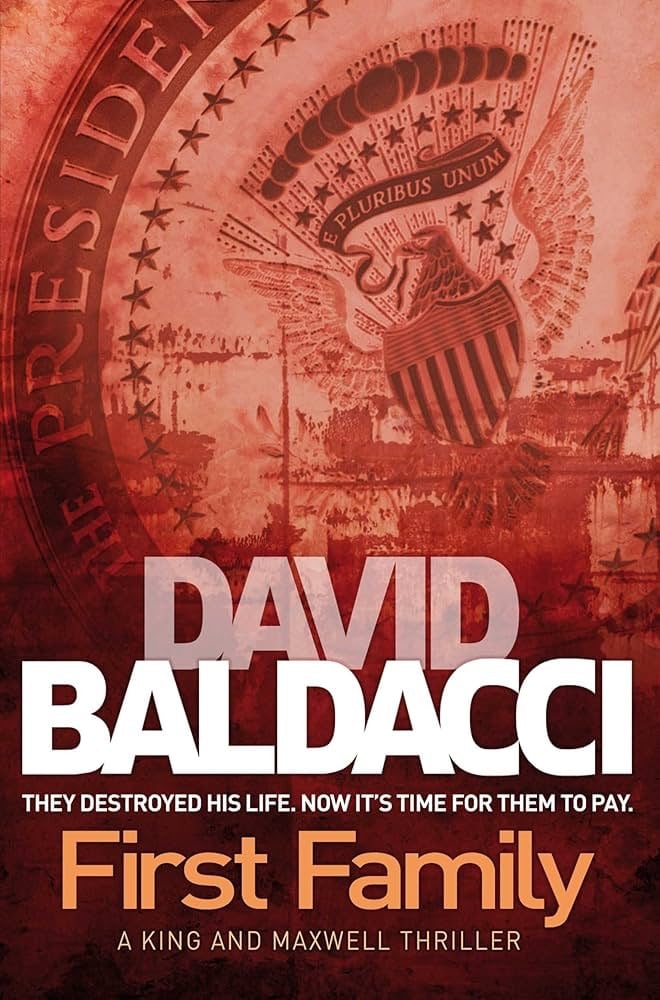

Of all the institutions that shape our lives, none is more powerful or more complex than the family. David Baldacci’s First Family, a gripping political thriller centered on a kidnapping at Camp David, uses its high-stakes plot to explore a profoundly sentimental truth: that beneath the public facades we all maintain, every family grapples with private struggles, unspoken loyalties, and the enduring power of love.
The novel’s genius lies in its central metaphor. The “First Family” of the United States is the most scrutinized household in the world, a symbol of perfect unity and strength. Yet, Baldacci swiftly pulls back the curtain to reveal a unit strained by pressure, hidden grief, and personal secrets. This dichotomy is instantly relatable. In our own lives, we understand the impulse to present a curated version of our families to neighbors, friends, and social media, while privately navigating the messy realities of misunderstanding, sacrifice, and old wounds. The book suggests that the gap between public image and private reality is a universal human experience.
At its heart, the story is driven by two powerful, parallel forces: a parent’s love and a child’s devotion. The antagonist, Sam Quarry, is not a mere criminal, but a grieving father. His drastic actions are motivated by a desperate, albeit twisted, love for his own daughter and a desire for justice for a past family tragedy. He embodies the terrifying lengths to which familial love, when corrupted by loss, can drive a person. Simultaneously, the resilience of the kidnapped girl and the unwavering determination of her family to get her back highlight the fierce, protective instinct that defines so many family bonds.
The ultimate lesson of First Family is one of shared humanity. By showcasing the vulnerabilities of the world's most prominent family, Baldacci dismantles the myth of the ideal household. He reminds us that no family, regardless of its power or privilege, is immune to pain, secrets, or internal conflict. The true strength of a family is not its perfection, but its resilience. It is found in the courage to confront hard truths, the capacity to forgive deep hurts, and the silent, steadfast commitment to stand together when everything falls apart. In the end, the novel is a poignant tribute to the imperfect, enduring, and deeply human connections that define us all.