
ELEVEN MINUTES
by PAULO COELHO. Photo credits Daraz.com & Amazon.
SELF-HELP
9/12/20252 min read
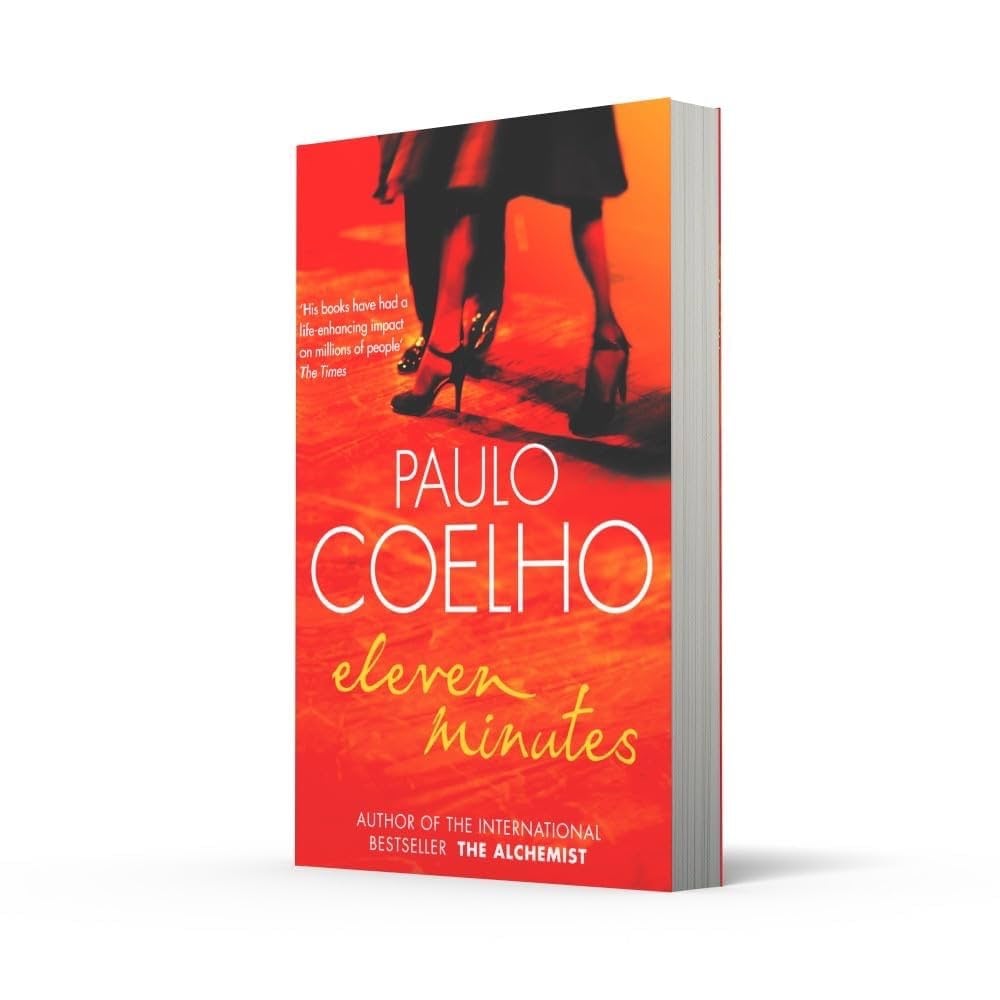
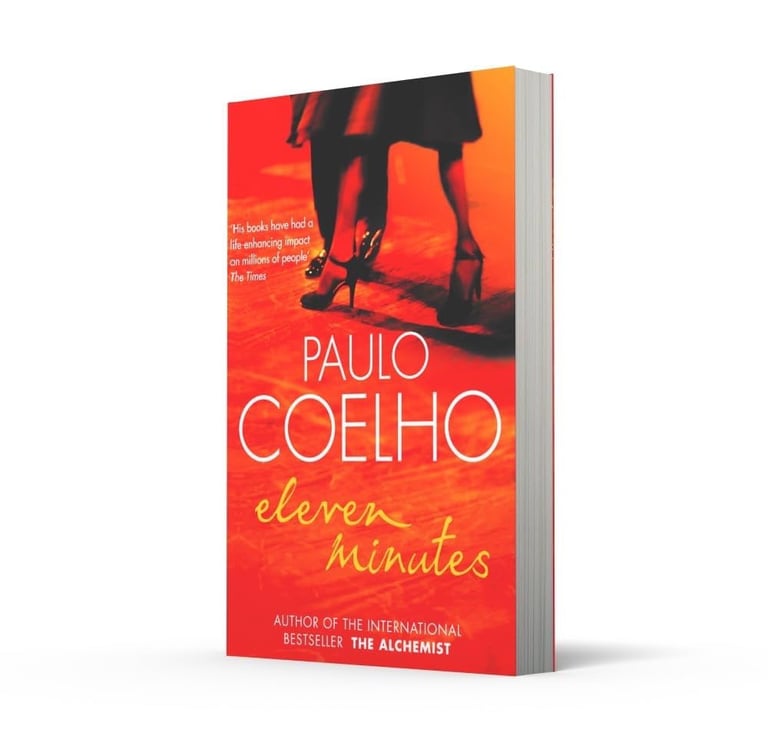
Paulo Coelho’s Eleven Minutes is not just a book; it’s a mirror held up to the soul’s deepest contradictions. At its surface, it tells the story of Maria, a young Brazilian woman whose journey from idealism to disillusionment leads her into prostitution in Geneva. Yet, beneath this provocative premise lies a profound exploration of love, pain, and the sacredness of human connection. Coelho masterfully intertwines the mundane and the metaphysical, forcing readers to confront their own biases and truths about desire, freedom, and the meaning of intimacy .
What makes Eleven Minutes one of Coelho’s finest works is its unflinching commitment to duality—the interplay between the sacred and the profane, pain and pleasure, love and possession. Unlike The Alchemist, which orbits the realm of dreams and destiny, Eleven Minutes delves into the gritty realities of the human experience, yet never loses its poetic grace. Coelho’s narrative is both stark and sensual, blending Maria’s raw diary entries with allegorical depth . This balance is where Coelho shines: he transforms a story about sex work into a universal quest for self-discovery and “inner light” .
The novel’s greatest strength lies in its philosophical richness, particularly its exploration of pain as a pathway to enlightenment. Through Maria’s encounters with clients like Terence (who introduces her to sadomasochism) and Ralf (a painter who sees her “inner light”), Coelho challenges readers to reconsider the boundaries between suffering and liberation . Maria’s realization that pain can lead to either pleasure or peace echoes the human condition—where our darkest moments often reveal the most profound truths about ourselves .
Coelho’s writing style—simple yet evocative—serves as the perfect vessel for this complex narrative. His use of symbolism (like the bird trapped in a cage, representing possessive love) and metaphors (such as the “eleven minutes” reducing sex to a transactional act) adds layers of meaning without overwhelming the reader . The result is a story that is both accessible and deeply contemplative, inviting us to reflect on our own lives: How often do we trade authenticity for security? When do we mistake possession for love?
In a world where human connections are increasingly commodified, Eleven Minutes remains painfully relevant. It reminds us that true freedom lies not in owning others or ourselves but in embracing the messy, beautiful journey of self-discovery. As Maria writes in her diary: “True experience of freedom is having the most important thing in the world without owning it” . This is Coelho at his best—not as a preacher, but as a guide who leads us through the abyss and back into the light.
Why Read It? It is for anyone seeking a story that challenges conventions and celebrates the resilience of the human spirit. It is perfect for readers of existential fiction, those interested in philosophy, and anyone unafraid to explore the shadows within.