
BLINK: The Power of Thinking Without Thinking
by MALCOLM GLADWELL. Photo credits Paper Plus & Carousell.
SELF-HELP
10/2/20252 min read
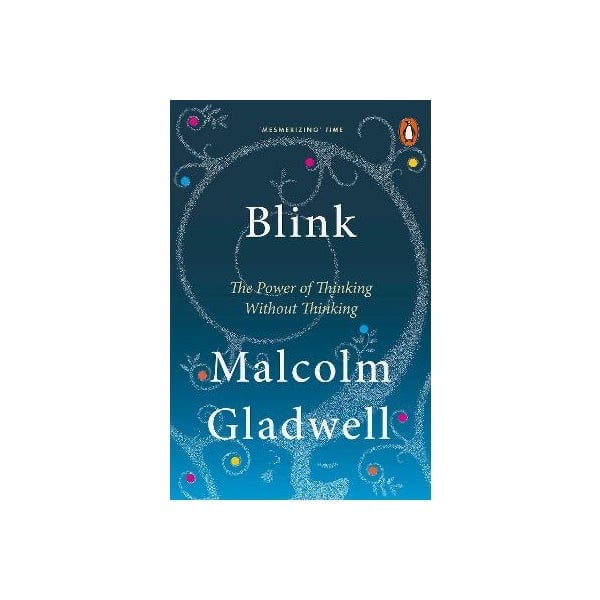
Blink: The Power of Thinking Without Thinking by Malcolm Gladwell is a fascinating exploration of the surprising power and occasional perils of our snap judgments. The book argues that decisions made in a blink of an eye can be just as good as those made after lengthy analysis, a concept that is both relatable and highly relevant to our fast-paced world .
At the heart of Blink is the idea of "thin-slicing"—our brain's ability to find patterns and make conclusions based on very narrow slices of experience . Gladwell illustrates this with compelling stories as powerful examples to show that our unconscious mind is a powerful pattern-recognition engine, often reaching conclusions faster than our conscious, analytical self can explain .
However, Gladwell is careful not to present intuition as an infallible superpower. A significant portion of the book is devoted to exploring the "dark side" of snap decisions. He discusses how subconscious biases and stereotypes can lead to tragic errors, such as the shooting of an unarmed man by police officers who made a split-second, life-altering mistake . This highlights a crucial lesson: while thin-slicing can be brilliant, it can also be dangerously biased. The key is not to always trust your gut, but to understand the conditions under which it can be educated and controlled .
So, what does this mean for us? Blink suggests that in an age of information overload, more data isn't always the answer. Often, simplicity and focus on the critical few factors lead to better decisions . The most practical insight in that we can create environments to foster better intuition. The example of blind auditions for orchestras, which led to a dramatic increase in female musicians, shows that by controlling the context, we can eliminate biases and allow true talent to be recognized in a blink .
In summary, Blink is an engaging and thought-provoking read that challenges our assumption that more deliberation is always better. It empowers us to appreciate the remarkable capabilities of our adaptive unconscious while cautioning us to be aware of its pitfalls. The book ultimately encourages a balance—harnessing the power of rapid cognition while intelligently structuring our world to make our snap judgments wiser and fairer .