
BEFORE EVER AFTER
A novel by SAMANTHA SOTTO. Photo credits eBay & Penguin Random House.
MYSTERY
3/2/20262 min read
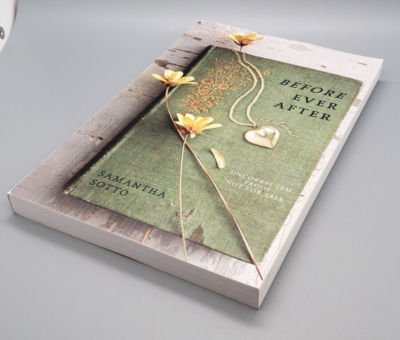
Samantha Sotto's Before Ever After is the kind of book that sneaks up on you. On the surface, it presents itself as a quirky romance: a woman whose supposedly dead husband might actually be immortal, traveling through Europe, collecting stories like souvenirs. But beneath its whimsical premise lies a surprisingly profound meditation on love, loss, and the stories we tell ourselves to survive both.
Here's the setup: Three years after Shelley's husband Max dies in a tragic train bombing, a stranger named Paolo appears claiming to be Max's grandson. The complication? Paolo looks exactly like Max. The even bigger complication? Paolo's grandfather might be ageless, still wandering Europe, still collecting stories, still very much alive. Shelley's quest to find him takes her from modern-day Manila through a Europe that exists somewhere between memory and imagination, guided by the historical vignettes Max once shared during their whirlwind romance.
But here's what hit me hardest about this book: it quietly dismantles our addiction to fantasy while simultaneously feeding it.
Lesson One: Reality is the best fantasy. In a world saturated with supernatural romances and escapist fiction, Sotto makes a radical argument. Max's immortality isn't a gift—it's a burden. Watching everyone you love age and die while you remain frozen? That's not a fairy tale; that's a slow tragedy. The book gently reminds us that the finite nature of love is precisely what makes it precious. We don't love despite the expiration date; we love because of it. Every moment matters when the clock is ticking.
Lesson Two: Love is not possession—it's preservation. Shelley's journey isn't really about finding Max. It's about understanding that loving someone means holding their stories carefully, even when they're gone. Max spent centuries collecting lives, experiencing history not as dates in a textbook but as flesh-and-blood moments. His gift to Shelley wasn't eternal youth or eternal presence—it was the understanding that we live on in the memories we leave behind. The historical vignettes scattered throughout aren't decorative; they're the point. Every life, no matter how brief, is a story worth telling.
Lesson Three: Grief is not a problem to solve. Shelley could have received a neat answer. She could have found Max, confronted him, gotten closure. Instead, the book offers something more honest: the acknowledgment that some questions remain unanswered, and that's okay. Love doesn't require resolution. It requires remembrance.
The travel writing here deserves special mention. Sotto makes Europe feel both familiar and enchanted—cobblestone streets where history breathes, cafes where strangers become storytellers, train stations where lives intersect and diverge. You'll finish this book with a serious case of wanderlust and a sudden urge to talk to elderly strangers about their lives.
Is it a bit messy? Sure. The time-hopping can disorient, and the first act moves slower than a gondola in a canal traffic jam. But by the final pages, you'll understand why this debut captured hearts. It's not really about an immortal man. It's about us—finite, fragile, and infinitely lucky to love at all.